
Electricity — power and energy consumption
|
There is another formula to calculate how much power a circuit has, and how much energy it spends:
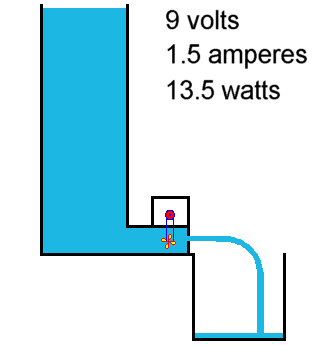
In our example, with a higher deposit and a larger current, we will have more power to move the turbine, so it will move faster, but we will use up more water to maintain the turbine spinning. Power is measured in watts (pronounced /wQts/). |
 |
|
The energy used by a machine depends on the power of the machine
and the time it is working,
so the electricity that we spend when we are watching TV can be calculated multiplying the
power of the TV by the time we are using it. Consumption is measured in watts hour,
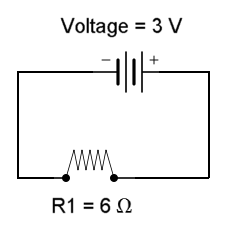
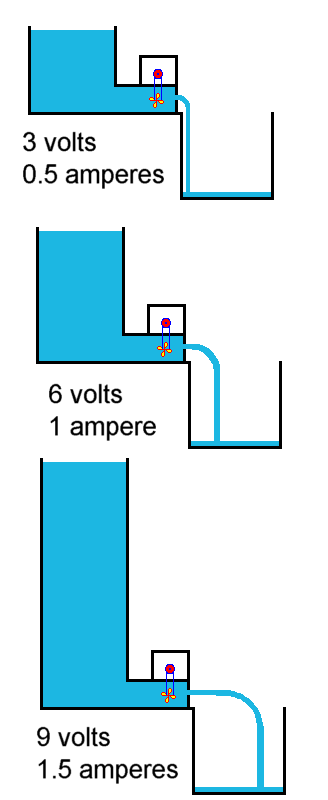
or more frequently, kilowatts hour. To calculate the consumption of the circuit on the right, first we calculate the intensity by dividing the voltage (3 volts) by the resistance (6 ohms): the result is 0.5 amperes. Then we can calculate the power by multiplying 3 volts (the voltage) by 0.5 amps (the intensity). The result equals 1.5 watts, so in an hour it will consume an energy of 1.5 watts hour. Going back to our example, the power in a circuit depends on the amount of water available in the first deposit (the voltage) and the amount of water that reaches the second deposit every second, i.e., how many electrons per second flow through the circuit (the intensity). We can use the formula above to calculate the power in the three circuits on the right:
The energy consumption is the total amount of water that has reached the second deposit in a certain time. For example, if we measure the amount of water that flows into the second deposit in an hour, we can calculate the energy spent in an hour. In the three ramps on the right, the consumption is, respectively, 1.5 watts hour, 6 watts hour, and 14.5 watts hour. |
|
When there are several resistances in a circuit, for example in a string of Christmas lights, consumption varies depending on how we connect the resistances (each bulb) to the source of energy (the battery):
Depending on which type of circuit we use, consumption will be higher or lower: in a parallel circuit consumption is higher, but when one machine breaks down it does not affect the rest, that is why it is used in people's homes.
JJCC