|
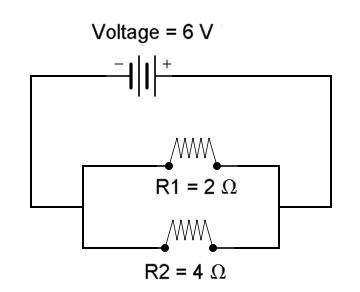
In a parallel circuit, all the elements are connected directly to the battery (see the circuit diagram on the right),
forming a network of wires, so if there are three bulbs and one stops working, the rest of the circuit
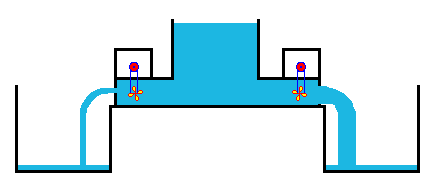
is still closed and the other lights still work. In a parallel circuit you need more energy, because each resistance has its own circuit (its own source of water). It is as if every time the wire is divided in two, another circuit is created, and the amount of electrons flowing from the battery increases. |
 |
 |
Problem: The voltage is 6 volts. The first resistance is 4 ohms. The second resistance is 2 ohms. What is the current flowing through the circuit? How much electricity will this circuit use up? This is a parallel circuit, so the current is different for each part of the circuit:
I2 = V / R2 = 6 / 2 = 3 amps. I = I1 + I2 = 1.5 + 3 = 4.5 amps. |
-
P = V • I = 6 • 4.5 = 27 watts.
JJCC