
Visual organisers
Handout to print (78 Kb .odt file).
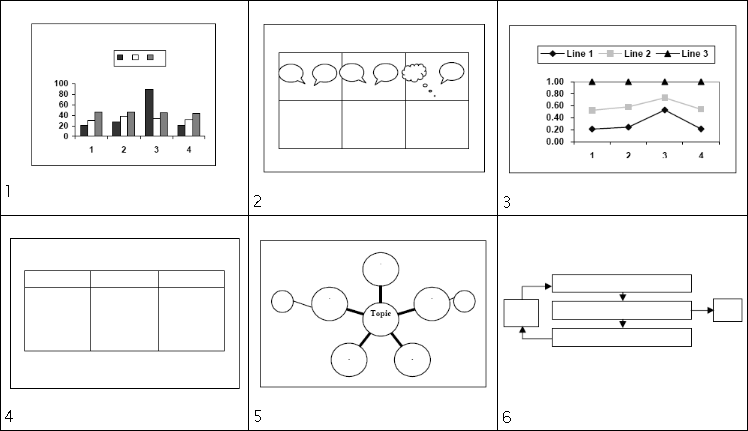
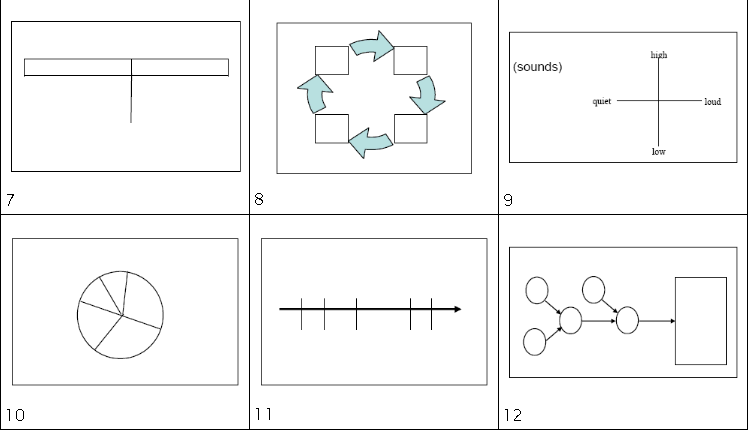
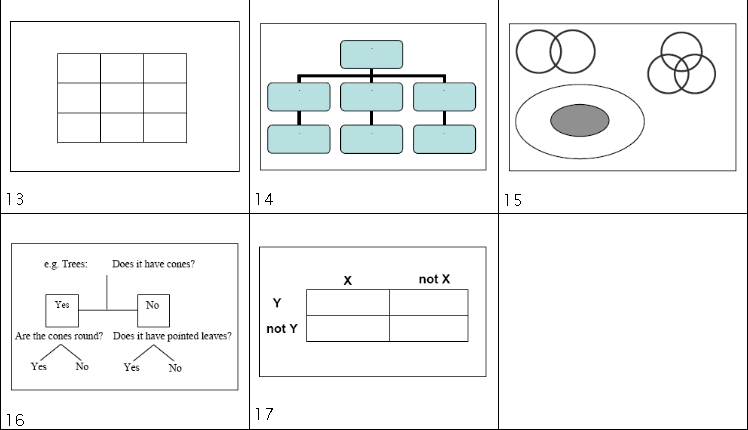
Choose the name of each graph or diagram from the list below, and copy it next to each graph type. Then write the letter that corresponds to its function.
Bar chart, Carroll diagram, Cycle, Flow diagram (or flow chart), Grid, Key: binary, Line graph, Mind map (descriptive), Pie chart, Process diagram or cause/ effect diagram, Quadrants, Storyboard, T-chart, Table, Time line, Tree diagram, Venn diagrams.
a) To show the cause effect factors which lead to an outcome or a sequence of steps which leads to the manufacture of a product.
b) To show events in chronological order.
c) To divide information into two parts using a series of questions, each of which has only two possible answers.
d) To classify information according two sets of different criteria.
e) To show different amounts of frequencies as parts of a circle.
f) To categorise information usually with columns and headings.
g) To show connections between two sets of concepts.
h) To show two sides of a topic such as for and against an argument; advantages and disadvantages; facts and opinions.
i) To show a trend or data using X and Y axes.
j) To show a series of events which happen again and again in the same order.
k) To show facts about specific people, places, objects or events.
l) To classify words and show their relationships often with examples.
m) To show frequency using rectangles which are the same width.
n) To show similarities and differences between two or among three objects, people, concepts, places etc., or to show a whole set of items and a sub-set of those items.
o) To show locations of places e.g. on maps.
p) To show the events in a story sometimes with speech and thought bubbles or short text.
JJCC