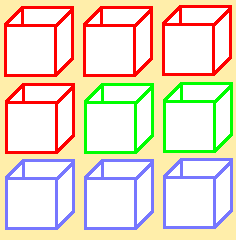
One box is red,
another box is green,
the other box is blue.
ADJECTIVES
INDEFINITE DEFINITE
SINGULAR another box the other box
PLURAL other boxes the other boxes
another box = one of the other boxes
the other box = the last box
There are three boxes:
one is red,
another is green,
the other is blue.
PRONOUNS
INDEFINITE DEFINITE
SINGULAR another the other
PLURAL others the others
another = one of the others
the other = the remaining one
Some boxes are red,
other boxes are green,
the other boxes are blue.
ADJECTIVES
INDEFINITE DEFINITE
SINGULAR another box the other box
PLURAL other boxes the other boxes
other boxes = some of the remaining boxes
the other boxes = the rest of the boxes
There are several boxes:
some are red,
others are green,
the others are blue.
PRONOUNS
INDEFINITE DEFINITE
SINGULAR another the other
PLURAL others the others
others = some of the remaining ones
the others = all the remaining ones
We need some other boxes. These are too small.
Have you got any other boxes?
Sorry, there are no other boxes.
Where are the other boxes, the big ones?
There are another two boxes in the garage.
There are two other boxes in the garage.
Bring the other two boxes, please.
ADJECTIVES
INDEFINITE DEFINITE
SINGULAR another box the other box
PLURAL some/any/no other boxes
two other boxes
another two boxes
the other boxes
the other two boxes
two other boxes = two different boxes
another two boxes = two more boxes
These boxes are too small. We need some others.
Have you got any others?
Sorry, there are no others.
There are two others in the garage.
Where are the others, the big ones?
PRONOUNS
INDEFINITE DEFINITE
SINGULAR another the other
PLURAL some/any/no others
two others
the others
the other two
There is too much work. We need another day.
I can't come tomorrow. Maybe some other day.
ADJECTIVES
INDEFINITE DEFINITE
SINGULAR another day
some other day
the other day
PLURAL other days
some other days
the other days
another day = one more day
some other day = on a different day
Three screws are not enough; we need another.
This screw is too small. We need some other.
These screws are too small. We need some others.
PRONOUNS
INDEFINITE DEFINITE
SINGULAR another
some other
the other
PLURAL some others the others
another = one more
some other = a different one


General rules (click to see the correct answer):

  1. For singular, undetermined nouns we normally use . Example:
    ¿Te apetece tomar otro vino? = [Would you like to have another wine?]

  2. However, if we mean "a different one", not "an additional one", then we use . Example:
    Me gustaría tomar (algún) otro vino. Éste no me gusta. = [I would like some other wine. I don't like this one.]

  3. For plural nouns we normally use , except when we also use a number. Example:
    ¿Qué tal si compramos otras tres pizzas? = [How about buying three other pizzas / another three pizzas?]
    (As above, there is a slight difference in meaning: "three others" means "three different ones"; "another three" means "three more".)

  4. For determined nouns we use . Example:
    Ahora mira con el otro ojo. = [Now look with the other eye.]

  5. We can use determiners, for example a possessive adjective or a demonstrative, before . Example:
    Mi otro coche es un Porsche. = [My other car is a Porsche.]
    ¿Cuánto cuestan esos otros diccionarios? = [How much do those other dictionaries cost?]

  6. After "many", "how many", "most", "several", etc. we can only use . Examples:
    ¿Cuántos otros habrían hecho lo mismo? = [How many others would have done the same?]
    Muchas otras personas votaron en contra. = [Many other people voted against.]

Special phrases:


JJCC