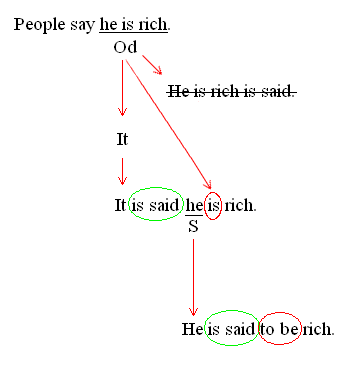
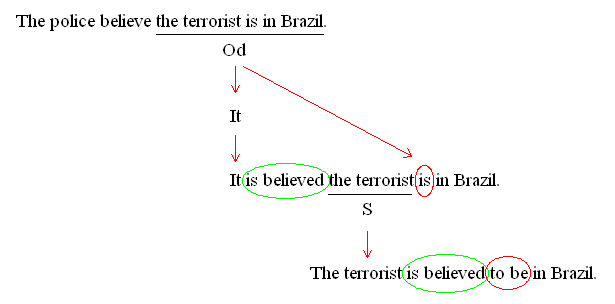
- In the first possibility, the direct object (the subordinate clause) is replaced by it, and then repeated after the verb.
The verb is transformed into the passive voice in the usual way.
- In the second possibility, which is the most frequent way, the subject of the subordinate clause becomes the subject of the passive sentence, too;
the main verb (say) is made passive in the usual way, but the verb in the subordinate clause becomes an infinitive with "to",
in a similar structure to those used in reported speech.
This way we can use a passive structure to omit a subject that we don't need, and we can start the sentence with a more interesting subject that a mere "it", but there is one problem: the tenses we can use are more limited, because the second verb has to be in either an infinitive (TO + Vinf) or a perfect infinitive (TO + have + past participle). These are the possibilities, using the verb "believe" as the introductory verb:
| They believe that now, it happens now | → | present + V-to inf. | → | The new planet is believed to be inhabitable. |
| They believed that in the past, it happened in the past | → | past + V-to inf. | → | In the 19th century, Mars was believed to be inhabited. |
| They believe that now, it happened in the past | → | present + V-to have inf. | → | Mars is believed to have been inhabitable millions of years ago. |
| They believed that in the past, it had happened before | → | past + V-to have inf. | → | Jupiter was believed to have created the universe. |
More examples:
-
Journalists expect the president will make a statement today.
----------

----------------------The president is expected to make a statement today.
(In this example, the verb "expects" expresses the future.)
People considered unscrupulous bankers were responsible for the economic crisis.
----------
--------------------Unscrupulous bankers were considered to be responsible for the economic crisis.
-
People assumed he had stolen the money.
-----
---------------------He was assumed to have stolen the money.
-
They expect the district attorney will investigate this matter.
----------

The district attorney is expected to investigate this matter.
-------------------------------------------
---------------------------------This matter is expected to be investigated by the district attorney.
-
They thought a black hole had swallowed the planet.
-----
A black hole was thought to have swallowed the planet.
------------------------------------------
----------------------------------The planet was thought to have been swallowed by a black hole.
© Juan José Castaño