Back to index
The passive II
In Spanish passive sentences the subject is always the direct object of the active sentence, that is to say,
the active direct object becomes the passive subject:
Columbus discovered America.
Columbus discovered AOd
America was discovered by Columbus.
AmS
In English, by contrast, we can sometimes use as a passive subject not only the direct object,
but also the indirect object:
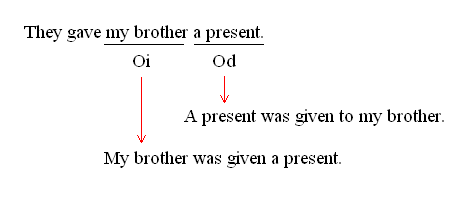
This can be done when the indirect object is the recipient of the direct object, that is,
when the direct object is given, lent, shown, offered, etc. to the indirect object:
They awarded an Oscar to Steven Spielberg.
Steven Spielberg was awarded an Oscar.
However, it cannot be done when the indirect object is the beneficiary of the direct object, that is,
when the direct object is done, made, prepared, etc. for the direct object:
My mother made an omelette for my brother.

Sometimes this distinction is fairly subtle, so the best way to be sure is to pay attention to the preposition
that comes before the indirect object (but which only appears to help identify the indirect object
when it is after the direct object, or when the sentence is in the passive):
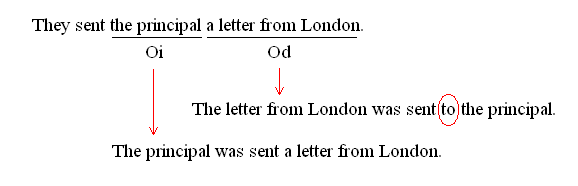
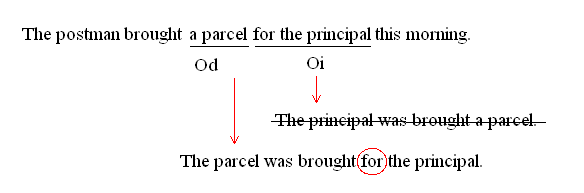
Some typical verbs that use this structure are: give, show, lend, offer, promise, send, award, pay,...
© Juan José Castaño